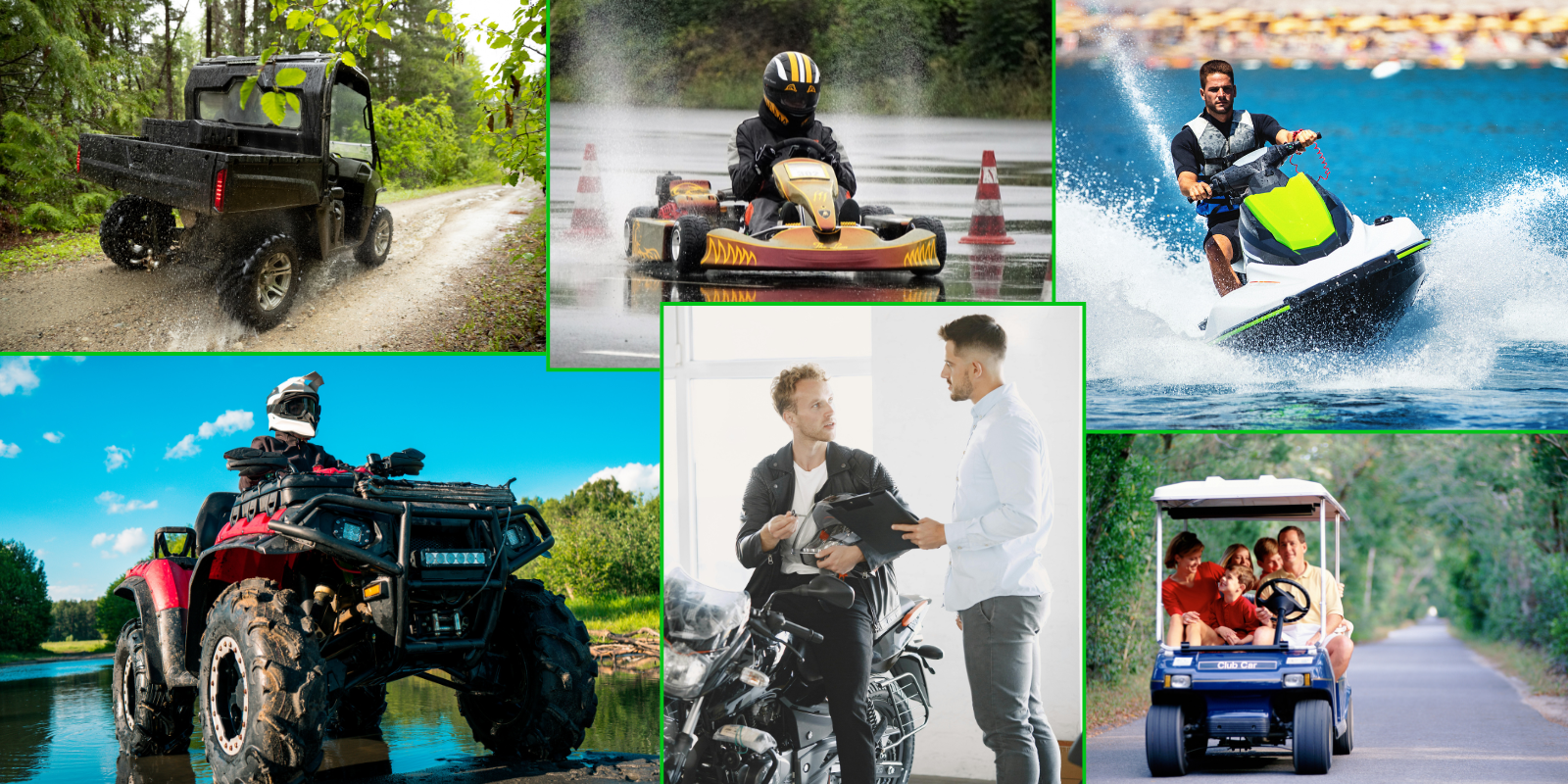






Buying a powersports vehicle involves two separate decisions.
First, you choose the ATV, UTV, snowmobile, motorcycle, dirt bike, or personal watercraft that fits your needs.
Then you decide how to finance it.
Many Canadian buyers arrange financing through the dealership selling the vehicle. Others use a powersports loan marketplace that can connect their application with participating lenders and may support purchases from dealerships or private sellers.
Neither route is automatically better.
Dealer financing may be the simplest option when you have already found the right unit and the dealership offers a competitive manufacturer or lender program.
A powersports financing loan marketplace in Canada may be more useful when you want broader lender access, need flexibility around the seller, or have a credit profile that may not fit one dealership’s available programs.
The better choice depends on:
- The type of powersports vehicle
- Whether it is new or used
- Whether you are buying from a dealer or private seller
- Your credit profile
- The dealership’s lender relationships
- Manufacturer promotions
- Down payment requirements
- Loan term and payment frequency
- Fees and optional products
- Total cost of borrowing
The goal is not simply to find the lowest advertised payment.
It is to find the financing structure that fits the buyer, the vehicle, and the transaction.
Dealer Financing vs Powersports Loan Marketplace: Quick Comparison
| Feature | Dealer Financing | Powersports Loan Marketplace |
|---|---|---|
| Where the process begins | With a specific dealership and vehicle | With the buyer’s financing application |
| Vehicle selection | Usually tied to dealer inventory | May support vehicles from multiple dealers or private sellers |
| Lender access | Limited to lenders and programs available through that dealer | Application may be considered across participating marketplace lenders |
| Manufacturer promotions | May provide access to special rates, rebates, or seasonal offers | Usually does not replace dealer-specific manufacturer promotions |
| Bad credit support | Depends on the dealer’s lender network | May include lenders serving prime, near-prime, and subprime profiles |
| Private sale support | Usually unavailable through standard dealer financing | May support eligible private-sale transactions |
| Trade-in handling | Often integrated into the dealership transaction | May require separate verification depending on the purchase |
| Convenience | Vehicle and financing completed together | Financing can often be explored before selecting the final vehicle |
| Best fit | Buyer has chosen a dealer unit and receives a strong offer | Buyer wants lender choice, seller flexibility, or broader credit support |
The central difference is where the process starts.
Dealer financing starts with the vehicle and dealership.
Marketplace financing starts with the buyer’s profile and desired purchase.
Which Vehicles Count as Powersports Vehicles?
For this comparison, powersports vehicles include:
- ATVs and quads
- UTVs and side-by-sides
- Motorcycles
- Dirt bikes
- Snowmobiles
- Personal watercraft
Canadian lenders and financing companies commonly group these vehicles together because they share similar recreational or utility uses and are often financed through specialty vehicle programs. TD Auto Finance, for example, includes ATVs, personal watercraft, snowmobiles, and motorcycles within its powersports financing category.
Finance That also identifies ATVs, motorcycles, snowmobiles, UTVs, dirt bikes, and personal watercraft within its powersports financing offering.
Larger boats and RVs should be treated separately because they usually fall under marine financing or RV financing rather than the core powersports category.
What Is Powersports Dealer Financing?
Powersports dealer financing is arranged through the dealership selling the vehicle.
The dealership may sell:
- New motorcycles
- Used ATVs
- Side-by-sides
- Snowmobiles
- Dirt bikes
- Personal watercraft
- Multiple powersports brands
The dealer is not always the company lending the money.
In many transactions, the dealership collects the application and submits it to one or more lenders or manufacturer finance programs.
Those may include:
- Banks
- Credit unions
- Manufacturer finance companies
- Specialty powersports lenders
- Alternative lenders
The lender reviews the application and decides whether to approve it, what rate to offer, what term is available, and whether a down payment or other conditions apply.
How Dealer Financing Usually Works
A typical dealer financing process looks like this:
- You select a powersports vehicle from the dealership.
- The dealer prepares the purchase price and trade-in figures.
- You complete a financing application.
- The dealer submits the application to available lender partners.
- A lender approves, declines, or requests more information.
- The dealership presents the available financing structure.
- You review the contract and complete the purchase.
Dealer financing is built around a specific transaction.
The lender knows:
- Which dealership is selling the vehicle
- The year, make, model, and VIN
- Whether the vehicle is new or used
- The agreed selling price
- Any trade-in value
- Taxes and dealership charges
- Accessories or protection products being financed
This can make the transaction efficient because the vehicle and financing documents move together.
Is the Dealership the Actual Lender?
Often, no.
The dealership may arrange the financing while a separate financial institution provides the loan.
This distinction matters because dealer financing is not one standard product.
A financing offer can vary based on:
- The manufacturer
- The dealer’s lender relationships
- Your credit profile
- The powersports vehicle
- The loan amount
- Available promotions
- The repayment term
- The province
- Whether the unit is new or used
Honda Financial Services, for example, offers financing for Honda motorcycles, ATVs, and power equipment. That type of manufacturer-backed financing may be available only through participating dealers and eligible products.
Another dealer may rely on a bank or specialty powersports lender instead.
Two dealerships selling similar vehicles may therefore produce different financing results because their programs and lender networks are not identical.
Advantages of Powersports Dealer Financing
1. The Purchase and Financing Happen Together
Convenience is the clearest dealer-financing advantage.
You can often:
- Choose the vehicle
- Discuss the trade-in
- Complete the credit application
- Review optional products
- Sign the financing documents
- Arrange pickup or delivery
This can be attractive when you want to complete the entire transaction in one place.
2. Access to Manufacturer Promotions
Dealerships may have access to manufacturer-supported incentives.
These can include:
- Reduced promotional rates
- Deferred first payments
- Cash rebates
- Accessory credits
- Seasonal financing programs
- Special terms on outgoing model years
This is particularly relevant for new motorcycles, ATVs, UTVs, snowmobiles, and personal watercraft.
A strong manufacturer offer can sometimes beat outside financing.
However, buyers should check whether the promotion replaces another incentive.
For example, you may have to choose between:
- A reduced interest rate
- A larger cash rebate
- Discounted accessories
- Another dealer incentive
The lowest promotional rate does not automatically produce the lowest total purchase cost.
3. Dealer Familiarity With the Vehicle
The dealership already has access to the asset information.
It can usually provide:
- VIN
- Year, make, and model
- Selling price
- Warranty details
- Accessory list
- Ownership records
- Trade-in information
- New or used status
This reduces the amount of separate asset verification required.
4. Easier Trade-In Coordination
A dealer can usually incorporate an existing powersports vehicle into the new purchase.
For example, you may trade:
- An ATV toward a side-by-side
- A motorcycle toward a newer motorcycle
- A snowmobile toward a current model
- A personal watercraft toward another unit
The dealer can calculate:
- Trade-in value
- Existing lien balance
- Positive equity
- Negative equity
- Net amount applied to the purchase
This can simplify a transaction that would otherwise involve a separate sale and loan payout.
5. Potentially Faster Finalization
When the vehicle, dealership, and financing documents are already connected, final approval and delivery can move quickly once the lender approves the file.
That does not mean every dealer application receives an immediate decision.
Income verification, credit issues, down payment conditions, or lender requests can still slow the process.
Disadvantages of Powersports Dealer Financing
1. The Lender Choice Depends on the Dealership
A dealership can only submit your application through the programs and lenders it can access.
A large multi-brand dealer may have several lender relationships.
A smaller dealership may have fewer.
This does not mean the dealership’s financing is poor.
It means the available result depends partly on that dealership’s network.
A buyer may receive a different offer elsewhere even when financing a similar vehicle.
2. The Financing Is Usually Connected to Dealer Inventory
Dealer financing is normally designed to fund a vehicle sold by that dealership.
If you later find:
- A less expensive ATV at another dealership
- A used motorcycle from a private seller
- A snowmobile in another province
- A side-by-side listed through an online marketplace
the original dealership financing arrangement may not follow you to that purchase.
3. It Can Be Harder to Separate Price From Payment
Dealership discussions often combine:
- Vehicle price
- Trade-in value
- Loan term
- Interest rate
- Accessories
- Warranty products
- Insurance products
- Monthly or biweekly payment
When these figures are discussed together, the buyer may focus on whether the payment feels affordable rather than whether the full deal is competitive.
A payment can be lowered by extending the term.
That may make the loan easier to manage each month, but it can increase total interest and keep the buyer in debt longer.
4. Promotional Offers Have Eligibility Rules
An advertised manufacturer rate may apply only to:
- Selected models
- New vehicles
- Specific loan terms
- Strong-credit borrowers
- Minimum or maximum loan amounts
- Purchases completed before a deadline
- Participating dealerships
The actual offer may differ from the headline promotion.
5. Optional Products Can Increase the Amount Financed
Dealer-arranged transactions may include optional products such as:
- Extended warranty
- Payment protection
- Theft protection
- Tire or wheel coverage
- Accessories
- Maintenance plans
These products may be useful for some buyers.
But when added to the loan, they increase the amount borrowed and the interest paid.
Each item should be reviewed separately.
What Is a Powersports Loan Marketplace?
A powersports loan marketplace such as Finance That Canada, is a platform that connects a financing application with participating lenders that may suit the buyer and transaction.
The marketplace is usually not the lender itself.
Its role may include:
- Collecting the application
- Reviewing the buyer’s basic information
- Identifying potentially suitable lender options
- Coordinating vehicle or seller details
- Supporting dealer or private-sale purchases
- Helping move the application toward final approval
The lender still makes the credit decision.
That lender determines:
- Approval
- Interest rate
- Loan term
- Down payment
- Conditions
- Final funding
A marketplace can be valuable because the buyer is not necessarily restricted to one dealership’s financing relationships or inventory.
How a Powersports Loan Marketplace Works
The process usually begins before the final transaction is complete.
A buyer may provide:
- Identity information
- Income and employment details
- Housing information
- Existing debt information
- Credit consent
- Estimated vehicle price
- Preferred powersports vehicle
- Dealer or private seller details
- Down payment information
The application may then be connected with suitable participating lenders.
Once the buyer chooses a vehicle, the marketplace and lender may need to verify:
- Year, make, and model
- VIN
- Purchase price
- Seller identity
- Ownership
- Existing liens
- Vehicle age and condition
- Bill of sale
- Insurance, where required
The exact process varies by lender, vehicle, and transaction type.
Advantages of a Powersports Loan Marketplace
1. Broader Participating Lender Access
A marketplace may connect the application with multiple participating lenders rather than relying on one dealership’s finance office.
That can be useful when the buyer has:
- Bruised credit
- Limited credit history
- Self-employed income
- Seasonal income
- A prior consumer proposal
- A non-standard purchase
- A used powersports vehicle
- A private-sale transaction
Broader lender access does not guarantee approval or the lowest possible rate.
It increases the possibility that the application reaches a lender whose criteria better match the buyer.
2. Greater Seller Flexibility
Depending on the marketplace and lender, the buyer may be able to purchase from:
- A franchised dealership
- An independent powersports dealer
- Another province
- An online listing
- A private seller
This matters because many attractive used ATVs, motorcycles, snowmobiles, and side-by-sides are sold privately.
Loans Canada notes that buyers purchasing a used powersports vehicle privately generally need to arrange financing separately from a dealership.
3. Financing Can Be Explored Before Choosing the Final Vehicle
A marketplace may help the buyer understand the likely financing range before committing to one unit.
That can help clarify:
- Approximate budget
- Whether a down payment may be needed
- Which vehicle ages may qualify
- Whether a private sale is realistic
- Which documents need to be prepared
- Whether the payment fits the buyer’s income
This changes the purchase order.
Instead of choosing a vehicle first and hoping the financing works, the buyer can shop within a more realistic range.
4. Better Fit for Multiple Credit Profiles
Some powersports marketplaces work with lenders serving prime, near-prime, and subprime applicants.
This can be useful for buyers with:
- Excellent credit
- Average credit
- Bad credit
- Thin credit history
- Past bankruptcy
- Consumer proposal history
- Recent credit rebuilding
The lender still evaluates the full application.
Income, debt load, recent payment behaviour, down payment, and the vehicle itself remain important.
5. Support for Private-Sale Transactions
A marketplace may support financing when the best vehicle is being sold privately.
That can apply to:
- Used motorcycles
- ATVs and UTVs
- Snowmobiles
- Dirt bikes
- Personal watercraft
Private-sale funding usually requires more verification than a dealership purchase.
The extra work may include checking liens, confirming ownership, validating the VIN, and arranging payment to the seller or existing lienholder.
The Financial Consumer Agency of Canada explains that liens can remain registered against a motor vehicle until the associated debt is repaid, which is why lien verification matters in privately arranged purchases.
Disadvantages of a Powersports Loan Marketplace
1. A Marketplace Does Not Represent Every Lender
A marketplace can only connect the application with its participating lender network.
It does not automatically compare every:
- Bank
- Credit union
- Manufacturer finance program
- Dealership lender
- Specialty lender in Canada
A marketplace offer should still be compared with a strong dealer or bank offer when one is available.
2. Manufacturer Promotions May Still Be Better
A marketplace may not have access to manufacturer-subsidized offers tied to a new vehicle or participating dealership.
For a buyer with strong credit purchasing an eligible new unit, a dealer promotion may provide:
- Lower rate
- Rebate
- Accessory package
- Deferred payment
- Better overall transaction value
The buyer should compare the full deal, not assume a marketplace always wins.
3. Private Sales Require More Documentation
Seller flexibility comes with more due diligence.
A private transaction may require:
- Ownership documents
- VIN confirmation
- Lien search
- Bill of sale
- Seller identification
- Inspection
- Market valuation
- Loan payout details
The CRA also notes that tax treatment can differ between dealership and private motor-vehicle purchases. GST/HST generally applies when buying from a registered dealership, while private sales may instead trigger provincial tax at registration. The precise treatment depends on the vehicle and province.
4. The Buyer May Need to Coordinate More Steps
Dealer financing is designed as a one-stop transaction.
A marketplace purchase may involve separate communication between:
- Buyer
- Seller
- Marketplace
- Lender
- Insurer
- Registry office
- Existing lienholder
The added flexibility can require more coordination.
The Real Difference Between the Two Options
The difference is not merely whether you apply online or inside a dealership.
It is how the financing relationship is organized.
Dealer financing connects the buyer to lenders through a specific dealership and vehicle.
Marketplace financing connects the buyer’s application to participating lenders and then supports an eligible purchase.
That difference influences:
- Lender access
- Seller choice
- Private-sale eligibility
- Promotional financing
- Asset verification
- Trade-in handling
- Bad-credit support
- Purchase speed
- Documentation requirements
Dealer financing can be the best choice when the right vehicle, promotion, and loan are already available in one place.
A marketplace can be the better choice when the buyer wants more freedom around the lender, seller, vehicle, or credit profile.
Which Option Is Better for Bad Credit?
A powersports loan marketplace is often the stronger starting point for buyers with bruised credit.
The reason is not that dealership financing cannot support bad credit.
Some dealerships work with alternative and subprime lenders. Others have experienced finance teams that understand how to structure a powersports application for a buyer with past credit challenges.
The difference is lender reach.
A marketplace may be able to route the application across a broader participating lender network instead of depending on the programs available through one dealership.
This can matter if the buyer has:
- Missed payments
- Collections
- Limited credit history
- Consumer proposal history
- Past bankruptcy
- High credit utilization
- Seasonal or self-employed income
- Recent credit rebuilding
Bad credit approval still depends on the full application.
Lenders may review:
- Current income
- Employment stability
- Existing debt
- Recent payment behaviour
- Down payment
- Vehicle price
- Vehicle age
- Seller type
- Loan term
- Amount financed
A buyer with bad credit may strengthen the file by choosing a lower-priced vehicle, making a down payment, reducing current debt, or providing complete income documentation.
When Dealer Financing May Still Work Better for Bad Credit
Dealer financing may still be the better option when:
- The dealership has strong alternative-lender relationships
- The buyer has already chosen a suitable vehicle
- The dealer can restructure the purchase price or trade-in
- The dealership has experience with credit-challenged applications
- The dealer offer is clearer or more affordable than outside options
The right answer is not based on the channel alone.
It depends on which lender is willing to approve the transaction on reasonable terms.
Which Option Is Better for a Private Sale?
A financing loan marketplace is usually better suited to private-sale financing.
Standard dealer financing is generally designed for vehicles sold through that dealership.
A private sale involves a different transaction structure because the seller is an individual rather than a dealership.
The lender or marketplace may need to verify:
- Seller identity
- Vehicle ownership
- VIN
- Existing liens
- Bill of sale
- Purchase price
- Vehicle age and condition
- Market value
- Insurance, if required
This applies to privately sold:
- Motorcycles
- ATVs
- UTVs
- Snowmobiles
- Dirt bikes
- Personal watercraft
Private-sale financing can expand the buyer’s options because many good used powersports vehicles never appear in dealer inventory.
However, the buyer should not rely only on the listing description.
Before funding, confirm:
- The seller legally owns the vehicle
- The ownership documents match the VIN
- There are no undisclosed liens
- The vehicle condition matches the price
- The lender accepts the vehicle type and age
- Any required inspection is complete
A private sale can provide better value, but it requires more due diligence.
Which Option Is Better for a New Powersports Vehicle?
Dealer financing is often strongest for new powersports vehicles.
New motorcycles, ATVs, snowmobiles, UTVs, and personal watercraft may qualify for manufacturer-supported promotions that are only available through participating dealerships.
These can include:
- Promotional rates
- Cash rebates
- Deferred payments
- Accessory credits
- Seasonal incentives
- Extended warranty offers
A marketplace may still provide a competitive alternative, especially if:
- The promotional rate is not available to the buyer
- The buyer wants a longer term
- The buyer wants to compare outside lender options
- The dealership has limited lender access
- The buyer’s credit profile does not fit the promotion
The correct comparison should include both the financing and the purchase incentives.
For example, compare:
Dealer option
- Lower promotional rate
- No cash rebate
- Specific term
- Dealer fees
- Optional products
Marketplace option
- Higher standard rate
- Larger cash discount
- Different term
- Fewer financed extras
- More lender flexibility
A lower rate does not automatically produce the lower total cost.
Which Option Is Better for a Used Powersports Vehicle?
A marketplace may provide more flexibility for used vehicles because the buyer can shop across:
- Franchised dealerships
- Independent dealers
- Online listings
- Private sellers
- Other provinces
Dealer financing can still work well for used inventory.
The dealer may already have:
- Ownership documents
- Inspection records
- Vehicle history
- Trade-in details
- Warranty options
- Lender-ready paperwork
The better choice depends on where the strongest vehicle and financing combination is found.
A used vehicle should be evaluated based on:
- Purchase price
- Age
- Mileage or engine hours
- Condition
- Service history
- Modifications
- Market value
- Loan term
- Interest rate
- Repair risk
Do not assume the lower-priced used unit will automatically have the lower payment.
An older vehicle may receive a shorter term or require a larger down payment.
Which Option Gives Buyers More Flexibility?
A loan marketplace generally provides more flexibility around:
- Seller choice
- Vehicle selection
- Private sales
- Lender matching
- Credit profiles
- Shopping before committing
- Financing outside one dealership
Dealer financing generally provides more convenience around:
- New inventory
- Trade-ins
- Manufacturer promotions
- Documentation
- Optional products
- Vehicle delivery
- One-stop completion
The choice is therefore not simply flexibility versus inflexibility.
It is:
broader shopping freedom versus integrated transaction convenience
Some buyers value the ability to compare several sellers.
Others value completing everything at one dealership.
Dealer Financing vs Marketplace by Buyer Type
| Buyer Situation | Option More Likely to Fit | Why |
|---|---|---|
| Buying a new motorcycle with a manufacturer promotion | Dealer financing | Dealer may have access to subsidized rates or rebates |
| Buying a used ATV from a private seller | Loan marketplace | Private-sale financing and seller verification may be supported |
| Strong credit and a competitive dealer offer | Dealer financing | Simple transaction and potentially attractive terms |
| Bruised credit or recent rebuilding | Loan marketplace | Broader participating lender access may improve fit |
| Buyer has not chosen a vehicle yet | Loan marketplace | Financing range may be explored before shopping |
| Trading in an existing snowmobile | Dealer financing | Trade value and lien payout can be handled together |
| Comparing units from several sellers | Loan marketplace | Financing is less tied to one inventory source |
| Buyer wants the fastest one-stop process | Dealer financing | Purchase and financing happen together |
| Self-employed buyer with variable income | Marketplace or experienced dealer | The stronger option depends on lender documentation rules |
| Buyer wants a private-sale side-by-side | Loan marketplace | Standard dealer financing usually does not apply |
How to Compare Powersports Financing Offers Properly
Do not compare financing offers using only the monthly or biweekly payment.
A lower payment can come from:
- A longer term
- A larger down payment
- A deferred first payment
- A balloon payment
- A different payment frequency
- More financed charges
- A lower purchase price
- A promotional interest rate
Compare the full structure.
1. Selling Price
Confirm the actual negotiated vehicle price before financing.
Do not let a payment-focused discussion hide a higher selling price.
2. Amount Financed
The amount financed may include:
- Vehicle price
- Taxes
- Dealer fees
- Accessories
- Warranty
- Protection products
- Negative trade equity
It may be much higher than the advertised vehicle price.
3. Interest Rate and APR
Review both the stated interest rate and the annual percentage rate when available.
The APR may provide a better picture of borrowing cost when certain fees are included.
4. Loan Term
Compare the number of months.
A lower payment over 84 months may cost more than a higher payment over 60 months.
5. Payment Frequency
Convert weekly, biweekly, and monthly offers to the same annual basis.
- A biweekly payment should be multiplied by 26.
- A weekly payment should be multiplied by 52.
- A monthly payment should be multiplied by 12.
6. Total Cost of Borrowing
Ask for the total interest and total amount repaid over the full term.
This is one of the clearest ways to compare two offers.
7. Down Payment
A larger down payment can lower the payment, but it also uses more cash upfront.
Compare offers using the same down payment where possible.
8. Optional Products
Separate optional warranties, insurance products, maintenance plans, and accessories from the base financing.
Ask whether each product is:
- Optional
- Financed
- Refundable
- Transferable
- Required by the lender
9. Prepayment Rules
Confirm whether you can:
- Make extra payments
- Pay the loan off early
- Increase payment frequency
- Pay without penalty
Flexible prepayment can reduce total interest.
10. Final Conditions
Check whether approval depends on:
- Proof of income
- Insurance
- Down payment
- Co-signer
- Vehicle inspection
- Lien clearance
- Additional documents
An offer is not fully comparable until the conditions are clear.
Example: Dealer Promotion vs Marketplace Offer
Consider a buyer purchasing a $20,000 new powersports vehicle.
Dealer Offer
- Vehicle price: $20,000
- Promotional rate: 5.99%
- Term: 60 months
- Rebate: $0
- Approximate monthly payment: $387
- Approximate total interest: $3,199
Marketplace Offer
- Vehicle price after rebate: $18,500
- Estimated rate: 8.99%
- Term: 60 months
- Approximate monthly payment: $384
- Approximate total interest: $4,538
At first glance, the dealer rate is much lower.
But the marketplace example begins with a lower purchase price.
The monthly payments are similar because price and rate work together.
This is why buyers should compare the entire transaction rather than one advertised number.
These figures are simplified examples and do not include taxes, fees, optional products, or lender-specific conditions.
Questions to Ask Before Accepting Financing
Ask the dealer, marketplace, or lender:
- Who is the actual lender?
- What is the interest rate?
- What is the APR?
- What is the total amount financed?
- How many payments are required?
- What is the total cost of borrowing?
- Is the loan open or closed?
- Can I pay it off early?
- Are there prepayment penalties?
- Is a down payment required?
- Are any products optional?
- Does the offer depend on giving up a rebate?
- Are there administrative fees?
- Is there a final balloon payment?
- What conditions remain before funding?
- Is the financing tied to one dealer or vehicle?
- Does the lender support private sales?
A clear financing provider should be able to explain the offer in plain language.
Red Flags to Watch For
Be cautious when:
- The payment is discussed but the rate is not
- The term is not clearly stated
- Optional products are presented as mandatory
- The amount financed is much higher than expected
- The dealer or platform will not identify the lender
- Fees are added without explanation
- The buyer is pressured to sign immediately
- A low rate is advertised without eligibility details
- Private-sale ownership or liens are not verified
- The vehicle price changes when financing is selected
- The contract includes a large final payment that was not explained
Take time to review the agreement before signing.
So, Which Option Is Better?
Choose dealer financing when:
- You are buying a new vehicle
- A strong manufacturer promotion is available
- You have selected a dealership unit
- You want trade-in and financing handled together
- The dealer offer is competitive
- Convenience is your priority
Choose a powersports loan marketplace when:
- You want access to more participating lenders
- You are buying privately
- You want to shop across multiple sellers
- You have bruised or limited credit
- You want to explore financing before selecting a vehicle
- Your income or application is less straightforward
- You do not want financing tied to one dealership
The best option is the one that gives you the right vehicle, affordable payment, reasonable total cost, and clear loan terms.
Compare Powersports Financing Options Through Finance That
Finance That helps Canadian buyers explore financing for:
- ATVs
- UTVs and side-by-sides
- Motorcycles
- Dirt bikes
- Snowmobiles
- Personal watercraft
You can apply for financing whether you are buying from a dealership or an eligible private seller.
Finance That connects applications with participating Canadian lenders across different credit profiles, including buyers with good credit, bruised credit, or limited credit history.
Apply online to compare powersports financing options in Canada through Finance That and see which purchase and payment structures may be available for your situation.
Approval, rates, terms, and funding remain subject to lender review and final conditions.
Frequently Asked Questions
Is dealer financing always more expensive?
No.
Dealer financing may be highly competitive, especially when a manufacturer offers a promotional rate or rebate.
Compare the purchase price, rate, fees, term, and total amount repaid before deciding.
Is a powersports loan marketplace a lender?
Not usually.
A marketplace connects the buyer’s application with participating lenders. The lender makes the approval decision and issues the financing agreement.
Can I use marketplace financing at a dealership?
Possibly.
The marketplace and lender may support purchases from eligible dealerships. Confirm that the seller and vehicle meet the lender’s requirements before committing.
Can I finance a powersports vehicle from a private seller?
Yes, through lenders or marketplaces that support private-sale financing.
The transaction may require ownership verification, a lien search, VIN confirmation, seller information, and a bill of sale.
Which option is better for bad credit?
A marketplace may provide broader access to lenders that work with different credit profiles.
However, some dealerships also have strong subprime lender relationships. Compare the actual approvals rather than assuming one channel is always better.
Can dealer financing offer a lower interest rate?
Yes.
Manufacturer-supported promotions can offer lower rates on eligible new vehicles and qualified buyers.
Check whether the lower rate replaces a cash rebate or another discount.
Does one marketplace application compare every lender in Canada?
No.
A marketplace works with its participating lender network. It does not represent every bank, credit union, dealership, or manufacturer finance company.
Is it better to arrange financing before choosing a vehicle?
It can be.
Exploring financing first helps establish a realistic price range, down payment requirement, and seller options before you commit to a specific vehicle.
Can I trade in a vehicle when using marketplace financing?
Possibly, depending on the seller and transaction.
Trade-ins are normally easier through dealer financing because the dealer can assess the vehicle, confirm the lien, and apply the net equity directly to the purchase.
What is the most important number to compare?
The total cost of borrowing is one of the most important figures.
You should also compare the selling price, amount financed, interest rate, APR, term, payment frequency, fees, and total amount repaid.
Sources
- Financial Consumer Agency of Canada, Shopping Around for Auto Financing:
https://www.canada.ca/en/financial-consumer-agency/services/loans/financing-car/shop-around.html - Financial Consumer Agency of Canada, Financial Risks When Buying a Vehicle:
https://www.canada.ca/en/financial-consumer-agency/services/loans/financing-car/risks.html - Financial Consumer Agency of Canada, Risks of Vehicle Liens:
https://www.canada.ca/en/financial-consumer-agency/services/loans/financing-car/risks-car-liens.html - Canada Revenue Agency, GST/HST Rules for Motor Vehicles:
https://www.canada.ca/en/revenue-agency/services/tax/businesses/topics/gst-hst-businesses/charge-collect-specific-situations/motor-vehicles.html - TD Canada Trust, Motorcycle and Powersports Financing:
https://www.td.com/ca/en/personal-banking/products/borrowing/auto-finance/motorcycle-powersports-financing - Honda Canada, Powersports Financial Services:
https://powersports.honda.ca/en/shopping-tools/financial-services