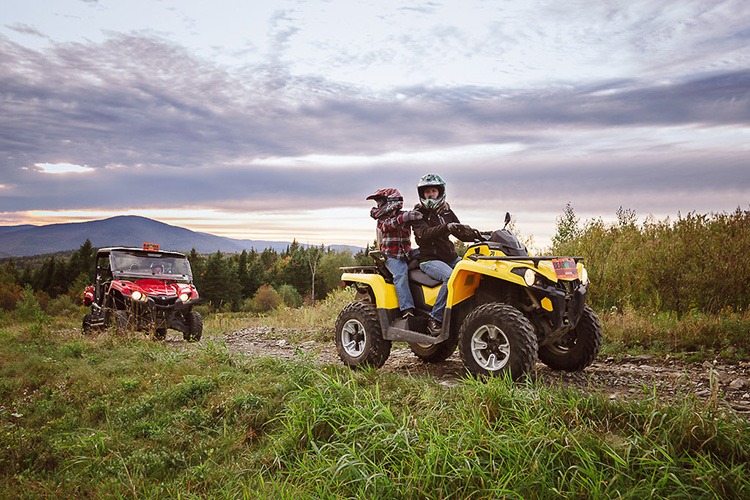






Estimate monthly payments in Canada. Use our marketplace to Compare loan amounts, rates, terms, down payments, taxes, and total interest. This article explains how the rate, term, loan amount, tax, and down payment combine to produce a payment.
How Much Will Your Monthly Payment Be?
An ATV loan calculator helps you estimate what a new or used ATV could cost each month before you submit a financing application.
Enter the ATV price, down payment, trade-in value, estimated interest rate, and loan term. The calculator can then show an approximate monthly payment and the total amount you may repay over the life of the loan.
Use the result as a planning tool, not a guaranteed financing offer.
Your final payment can change based on your approved rate, credit profile, province, taxes, fees, ATV age, lender conditions, and whether you are purchasing from a dealership or private seller.
ATV price → amount financed → rate and term → estimated payment → ownership affordability → financing comparison → application
Estimate Your ATV Loan Payment Before You Apply
You can estimate an ATV loan payment by combining the purchase price, down payment, trade-in value, expected interest rate, and loan term.
A basic estimate should account for:
- ATV purchase price
- Down payment
- Positive or negative trade-in equity
- Estimated interest rate
- Loan term in months
- Provincial sales tax
- Dealer or lender fees
- Accessories or protection products added to the loan
- Monthly, biweekly, or weekly payment frequency
The result will only be an estimate because your actual payment depends on the rate and loan terms offered after a lender reviews your application.
Finance That does not currently provide a public ATV loan calculator on this page. Once you create an account and access the Finance That platform, you can review financing options and compare payment scenarios based on the information available for your application.
This is more useful than relying on a generic calculator because the comparison reflects actual financing variables connected to your profile, the ATV, and participating lender options.
Information to Have Ready
Before estimating your payment or applying for financing, gather:
- The agreed ATV purchase price
- Your available down payment
- The value and remaining balance of any trade-in
- The ATV year, make, and model
- Whether the ATV is new or used
- Whether you are buying from a dealer or private seller
- Your preferred repayment term
- Your province of residence
- Any taxes, fees, or accessories that may be financed
Having these figures ready gives you a more realistic payment range and makes it easier to compare different loan structures after logging into the platform.
Important: Any payment estimate is for planning purposes only. It is not a loan approval, guaranteed interest rate, or final financing offer. Actual rates, payments, and terms depend on lender approval, credit profile, income, existing debt, ATV details, taxes, fees, down payment, and other financing conditions.
 Finance That publicly positions itself as a Canadian marketplace connecting buyers with financing across vehicles and powersports, while federal consumer guidance reinforces comparing total borrowing cost rather than judging a loan only by its monthly payment.
Quick ATV Payment Examples
Here are a few simplified examples showing how loan amount, interest rate, and term affect an estimated monthly payment.
| Amount Financed | Estimated Rate | Loan Term | Approximate Monthly Payment |
|---|---|---|---|
| $15,000 | 9.99% | 60 months | $319 |
| $20,000 | 9.99% | 60 months | $425 |
| $15,000 | 14.99% | 60 months | $357 |
| $15,000 | 9.99% | 84 months | $249 |
These examples exclude taxes, lender fees, warranties, accessories, insurance, and other costs that may be included in the final amount financed.
The table shows two important patterns.
A higher interest rate increases the payment.
A longer loan term lowers the monthly payment, but usually increases the total interest paid.
That is why the lowest monthly payment is not always the cheapest financing option.
How Does an ATV Loan Calculator Work?
An ATV financing calculator estimates your regular payment by combining four main figures:
- The amount borrowed
- The annual interest rate
- The repayment term
- The payment frequency
The basic relationship is simple:
Higher loan amount + higher rate + shorter term = higher payment
A larger down payment or trade-in reduces the amount borrowed. A longer term spreads repayment over more months, which lowers the regular payment.
However, stretching the term does not reduce the ATV’s price. It normally means you remain in debt longer and pay more interest over the full loan.
What Information Should You Enter?
The estimate is only as useful as the numbers you enter.
Avoid entering only the advertised ATV price and treating the result as your final payment. The amount financed may also include tax, accessories, protection products, documentation charges, and other approved costs.
ATV Purchase Price
Start with the agreed selling price of the ATV, UTV, quad, or side-by-side.
This may be:
- The dealership selling price
- The private seller’s agreed price
- The price of a used ATV
- The negotiated price after a discount
- The vehicle price before taxes and fees
Do not automatically use the manufacturer’s suggested retail price if the actual selling price is different.
The calculator should reflect the deal you are realistically considering.
Down Payment
A down payment is money you contribute upfront.
It reduces the amount that needs to be financed.
For example:
| ATV Price | Down Payment | Remaining Amount Before Tax and Fees |
|---|---|---|
| $15,000 | $0 | $15,000 |
| $15,000 | $1,500 | $13,500 |
| $15,000 | $3,000 | $12,000 |
A larger down payment may:
- Lower your monthly payment
- Reduce total interest
- Improve the strength of the application
- Help offset weaker credit
- Reduce the risk of owing more than the ATV is worth
Do not use every dollar of available savings solely to reduce the payment. Keep enough cash for insurance, riding equipment, maintenance, registration, transportation, and unexpected repairs.
Trade-In Value
If you are trading in an ATV, motorcycle, snowmobile, trailer, or another powersports vehicle, enter the amount the dealer is applying toward the purchase.
The relevant number is usually the net trade-in equity, not simply the trade-in allowance.
For example:
- Trade-in value: $8,000
- Remaining loan balance: $5,000
- Positive equity: $3,000
In that case, $3,000 may reduce the new amount financed.
If you owe more than the trade-in is worth, you have negative equity.
For example:
- Trade-in value: $8,000
- Remaining loan balance: $10,500
- Negative equity: $2,500
If a lender allows that shortfall to be added to the new loan, the amount financed increases by $2,500.
That can raise both the monthly payment and the risk of remaining in a negative-equity position.
Estimated Interest Rate
The interest rate represents the annual cost of borrowing before considering the full effect of applicable fees.
Your final ATV loan rate may depend on:
- Credit score and credit history
- Income stability
- Existing debt
- Loan amount
- Down payment
- ATV age
- New or used condition
- Dealer or private sale
- Loan term
- Lender risk criteria
Use a realistic rate range when testing the calculator.
Do not enter the lowest advertised rate unless you have reason to believe you may qualify for it.
A better approach is to calculate three scenarios:
| Scenario | Example Rate |
|---|---|
| Stronger approval scenario | 7.99% |
| Middle estimate | 11.99% |
| Higher-cost scenario | 16.99% |
This gives you a payment range instead of one overly optimistic number.
Interest Rate vs APR
Interest rate and annual percentage rate are related, but they are not always identical.
The interest rate reflects the cost charged on the borrowed principal.
APR is designed to express the annualized borrowing cost and may include certain applicable finance charges or administrative fees.
When comparing two ATV financing offers, do not compare only the advertised interest rate.
Review:
- APR
- Payment amount
- Number of payments
- Loan term
- Total cost of borrowing
- Administrative fees
- Optional products
- Prepayment conditions
A loan with a lower payment can still cost more overall if it has a longer term or additional financed charges.
Choosing the ATV Loan Term
The loan term is the number of months used to repay the financing.
Common terms may include:
- 36 months
- 48 months
- 60 months
- 72 months
- 84 months
Available terms depend on the lender, borrower, loan amount, and ATV.
A shorter term usually means:
- Higher regular payments
- Faster repayment
- Less total interest
- Faster equity building
A longer term usually means:
- Lower regular payments
- More total interest
- Slower equity building
- A greater chance of owing more than the ATV is worth early in the loan
Consider the monthly payment and total borrowing cost together.
Example: 60-Month vs 84-Month ATV Loan
Assume you finance $15,000 at an estimated annual rate of 9.99%.
| Loan Term | Approximate Monthly Payment | Approximate Total of Payments | Approximate Interest |
|---|---|---|---|
| 60 months | $319 | $19,118 | $4,118 |
| 84 months | $249 | $20,911 | $5,911 |
The 84-month term lowers the payment by about $70 per month.
But it also adds approximately $1,793 in interest and keeps the borrower in debt for two additional years.
That may still be worthwhile when monthly cash flow is the main concern. But it should be a deliberate choice, not a decision based only on the lowest displayed payment.
ATV Payment Example With Bad Credit
Bad credit does not create one standard ATV loan rate.
The payment depends on the applicant’s recent credit history, income, existing debt, down payment, loan term, and the ATV being financed.
For illustration, assume a buyer finances $12,000 over 60 months:
| Estimated Rate | Approximate Monthly Payment | Approximate Total Interest |
|---|---|---|
| 14.99% | $285 | $5,126 |
| 17.99% | $305 | $6,279 |
| 19.99% | $318 | $7,074 |
These are mathematical examples, not quoted Finance That rates or guaranteed offers.
A bad credit buyer may be able to reduce the amount financed and monthly payment by choosing a less expensive ATV or making a larger down payment. A lender may also offer a different term based on the applicant’s income, credit history, and asset details.
Calculate the Amount Financed, Not Just the ATV Price
The amount financed is not always the same as the sticker price.
A basic estimate may look like this:
**ATV price
- applicable taxes
- approved fees and accessories
- down payment
- positive trade-in equity
= estimated amount financed**
Example:
| Item | Amount |
|---|---|
| ATV selling price | $16,000 |
| Taxes and approved charges | $2,300 |
| Down payment | -$2,000 |
| Positive trade-in equity | -$1,500 |
| Estimated amount financed | $14,800 |
Entering $16,000 into the calculator without the other figures would not accurately reflect this deal.
In some cases, the amount financed may be higher than the advertised ATV price because taxes, protection products, accessories, delivery, or negative equity have been added.
Should Sales Tax Be Included in the ATV Calculator?
Yes, if the tax will be financed.
Sales taxes vary by province and by transaction type. Dealer purchases and private sales may also be treated differently.
The calculator should therefore allow users to:
- Select their province
- Enter a tax rate manually
- Include or exclude tax
- Distinguish a dealer purchase from a private sale
Do not assume the tax treatment is identical across Canada.
The safest estimate is based on the buyer’s province, seller type, and the amount on which tax is actually charged.
How Credit Score Can Change an ATV Payment
Credit score affects more than whether you qualify.
It can also influence:
- Interest rate
- Required down payment
- Available loan term
- Maximum amount financed
- Lender selection
- Total borrowing cost
Two buyers financing the same ATV may receive different payments because their credit profiles are different.
Consider a simplified example based on financing $12,000 over 60 months:
| Estimated Rate | Approximate Monthly Payment | Approximate Total Interest |
|---|---|---|
| 7.99% | $243 | $2,596 |
| 12.99% | $273 | $4,379 |
| 17.99% | $305 | $6,279 |
The difference between 7.99% and 17.99% is about $62 per month.
Over five years, the higher-rate example adds approximately $3,683 in interest.
These examples are not offers or guaranteed rates. They show why your approved interest rate matters when estimating an ATV payment.
A lower credit score does not always mean automatic decline. However, the lender may offset the additional risk through a higher rate, shorter term, larger down payment, or lower approved loan amount.
ATV Payment Examples by Purchase Price
ATVs and side-by-sides come in very different price ranges.
A basic utility ATV may require a much smaller loan than a high-performance side-by-side with accessories, upgraded suspension, a roof, windshield, winch, and protection package.
Here are simplified payment examples:
| Amount Financed | Estimated Rate | Term | Approximate Monthly Payment |
|---|---|---|---|
| $12,000 | 7.99% | 60 months | $243 |
| $12,000 | 12.99% | 60 months | $273 |
| $18,000 | 9.99% | 72 months | $333 |
| $25,000 | 11.99% | 84 months | $441 |
The amount financed is what matters, not only the ATV’s advertised price.
If taxes, accessories, fees, or negative trade-in equity are added to the loan, the payment will rise.
New vs Used ATV Payment Estimates
A used ATV may have a lower purchase price, but that does not always mean it receives the same financing structure as a new one.
Lenders may consider:
- ATV age
- Mileage or engine hours
- Condition
- Market value
- Brand and model
- Dealer or private seller
- Remaining useful life
- Loan amount compared with asset value
A newer ATV may qualify for a longer term because the lender expects it to retain useful value for longer.
An older unit may have:
- A shorter available term
- A higher required down payment
- More limited lender options
- Additional inspection or valuation requirements
For example, compare these simplified scenarios:
| Scenario | Amount Financed | Rate | Term | Approximate Monthly Payment |
|---|---|---|---|---|
| Used ATV | $12,000 | 12.99% | 48 months | $322 |
| New ATV | $18,000 | 9.99% | 72 months | $333 |
The new ATV costs considerably more, but the payment is only slightly higher because the example uses a longer term and lower rate.
That does not automatically make the new ATV the better deal.
The buyer would still need to compare:
- Total interest
- Total amount repaid
- Depreciation
- Warranty coverage
- Maintenance
- Insurance
- Expected ownership period
Dealer vs Private Sale ATV Payments
The loan payment formula does not change simply because the ATV comes from a private seller.
However, the financing structure may change.
A dealership normally provides:
- Purchase agreement
- Vehicle details
- Tax calculation
- Trade-in information
- Ownership documentation
- Optional products and fees
A private sale may require:
- Bill of sale
- Seller identification
- Ownership verification
- VIN confirmation
- Lien search
- Market valuation
- Inspection
- Direct payout to the seller or lienholder
The lender may also have different rules for the age, value, or condition of a privately sold ATV.
When estimating a private sale payment, do not assume that the seller’s asking price is the only amount involved. Registration costs, applicable tax, inspection, repairs, transportation, and immediate maintenance may affect your real budget.
Monthly, Biweekly, or Weekly Payments
ATV financing may be displayed using monthly, biweekly, or weekly payments.
This can make two offers look different even when their total cost is similar.
For a rough conversion:
- Monthly payment × 12 = approximate annual payments
- Biweekly payment × 26 = approximate annual payments
- Weekly payment × 52 = approximate annual payments
For example, a payment advertised as $102 biweekly equals approximately $2,652 per year.
That is about $221 per month when the annual total is divided by 12.
Do not compare a weekly payment from one lender with a monthly payment from another without converting them to the same frequency.
Also confirm whether the payment schedule is standard or accelerated.
A true accelerated schedule may result in more being paid each year. That can reduce principal faster, but it also means the annual cash outflow is higher.
How Much ATV Can You Afford?
Loan approval and affordability are not the same thing.
A lender may approve an amount that technically fits its underwriting criteria. That does not mean the payment will feel comfortable after your other costs are considered.
Before deciding what ATV price fits your budget, review:
- Monthly net income
- Housing costs
- Car or truck payments
- Credit card payments
- Personal loans
- Childcare
- Insurance
- Fuel
- Savings goals
- Seasonal income changes
- Emergency expenses
Then add the ongoing cost of ATV ownership.
A practical affordability estimate should include:
**ATV loan payment
- insurance
- fuel
- maintenance
- registration
- storage
- trailer or transportation costs
- safety equipment
= estimated monthly ownership cost**
The payment is only one part of the purchase.
Costs Beyond the ATV Loan Payment
Insurance
Insurance costs depend on the ATV, province, coverage, rider history, usage, and insurer.
A financed ATV may require insurance that protects the lender’s interest in the vehicle.
Confirm the insurance cost before finalizing the purchase.
Fuel and Riding Frequency
Fuel cost depends on the ATV’s engine size, terrain, riding style, load, and how often you use it.
A recreational rider who uses an ATV several weekends each summer will have a different budget from someone using a utility ATV regularly for farming, hunting, property maintenance, or work.
Instead of relying on one generic monthly fuel estimate, review how often you expect to ride and include fuel in your seasonal ownership budget.
Maintenance and Repairs
ATVs operate in mud, water, dust, snow, and rough terrain.
Budget for:
- Oil and filter changes
- Tires
- Brake service
- Belts
- Batteries
- Suspension repairs
- Fluid changes
- Cleaning and corrosion prevention
- Unexpected mechanical repairs
Used ATVs may need immediate maintenance even when the purchase price is lower.
Accessories and Riding Equipment
Common additions include:
- Winch
- Roof
- Windshield
- Skid plates
- Storage boxes
- Plow
- Tracks
- Trailer
- Helmet
- Protective clothing
- Boots
- Gloves
Adding these products to the financing lowers the amount you pay upfront, but increases the principal and total interest.
Transportation and Storage
Some buyers also need a trailer or suitable tow vehicle.
Others pay for seasonal storage.
Include these costs before deciding what monthly loan payment feels affordable.
Should You Choose the Lowest Monthly Payment?
Not automatically.
A low payment may be created by:
- Extending the loan term
- Increasing the down payment
- Deferring payments
- Adding a balloon amount
- Using a lower introductory rate
- Restructuring the payment frequency
Always ask what creates the lower payment.
Then compare:
- Amount financed
- Interest rate
- APR
- Number of payments
- Total interest
- Total borrowing cost
- Fees
- Prepayment rules
- Final payment, if any
The lowest payment may help with cash flow.
But a slightly higher payment over a shorter term can save a meaningful amount of interest and help you build equity faster.
Estimate vs Pre-Approval: What Is the Difference?
A payment estimate is a planning calculation.
It uses assumptions about the price, rate, term, and down payment.
A pre-approval is based on information reviewed as part of a financing application.
That may include:
- Credit profile
- Income
- Employment
- Existing debt
- Residence
- Down payment
- ATV details
- Purchase source
- Lender requirements
An estimate tells you what a payment could look like.
A pre-approval gives you a more realistic picture of the loan amount, rate range, term, and conditions that may be available for your situation.
Neither should be confused with final funding.
Final approval may still depend on verifying the ATV, seller, documents, insurance, lien status, and purchase details.
How to Compare ATV Financing Options Through Finance That
Finance That connects Canadian buyers with financing options for ATVs, RVs, side-by-sides, and other powersports vehicles.
The public article helps you understand how an ATV payment is calculated.
After you create an account and access the Finance That platform, you can review financing information and compare available payment scenarios based on your application, asset, and lender options.
This allows you to compare more meaningful figures than a generic public calculator can provide.
Depending on the information available for your application, you may be able to review differences involving:
- Loan amount
- Interest rate
- Repayment term
- Payment frequency
- Down payment
- Monthly payment
- Total borrowing cost
- Lender conditions
Finance That can also support purchases involving:
- New ATVs
- Used ATVs
- Dealer inventory
- Private sellers
- Good credit
- Bruised credit
- Limited credit history
Before You Apply
Have the following information ready:
- ATV purchase price
- Year, make, and model
- Dealer or private seller information
- Proposed down payment
- Trade-in details
- Current loan balance on any trade-in
- Proof of income
- Government-issued identification
- Address and employment information
Accurate information helps produce a more useful financing comparison.
Ready to Compare ATV Payment Options?
A rough calculation can help you set a budget.
The next step is finding out what financing structure may be available based on your credit profile, income, ATV, and purchase type.
Apply through Finance That to explore ATV financing options in Canada and compare payment scenarios through your account.
Whether you are buying a new or used ATV from a dealership or private seller, Finance That can help connect your application with suitable lender options.
Calculate ATV Loans – Frequently Asked Questions
How much is the monthly payment on a $15,000 ATV?
The payment depends on the interest rate and loan term.
As an example, financing $15,000 at 9.99% for 60 months produces an estimated payment of about $319 per month. Taxes, fees, optional products, and other financed amounts would increase the payment.
How much is the monthly payment on a $20,000 ATV?
At an estimated rate of 9.99% over 60 months, a $20,000 loan would have an approximate monthly payment of $425.
The actual payment depends on the approved rate, term, taxes, down payment, and lender conditions.
Does a down payment lower an ATV payment?
Yes.
A down payment reduces the amount financed. This normally lowers the monthly payment and total interest paid.
It may also strengthen the application, particularly when the buyer has weaker credit or is purchasing an older ATV.
Can I calculate an ATV payment without knowing my interest rate?
You can create a payment range using several estimated rates.
Calculate a stronger-credit scenario, a middle scenario, and a higher-rate scenario. This provides a more realistic range than relying on one low advertised rate.
Does Finance That have a public ATV loan calculator?
Finance That does not currently provide a public calculator on this article.
The article helps buyers understand and estimate payments. Once users create an account and access the Finance That platform, they can review financing information and compare payment scenarios connected to their application and available options.
Can I finance taxes and ATV accessories?
Taxes, accessories, warranties, and certain approved charges may sometimes be included in the amount financed.
This depends on the lender, deal structure, asset value, and approval conditions. Adding them to the loan increases both the payment and total borrowing cost.
Is a longer ATV loan term better?
A longer term can lower the regular payment.
However, it usually increases total interest and keeps the borrower in debt longer. Compare both the payment and total cost before selecting a term.
Can I estimate payments for a private sale ATV?
Yes.
Use the agreed purchase price, expected tax, down payment, estimated rate, and term. Keep extra room in your budget for an inspection, lien verification, registration, repairs, and transportation.
Will an ATV payment estimate affect my credit score?
No.
Reading the examples or making your own mathematical estimate does not involve a credit check.
Submitting a financing application may result in a credit inquiry as part of the lender review process.
Sources
- Financial Consumer Agency of Canada, Shopping Around for Auto Financing:
https://www.canada.ca/en/financial-consumer-agency/services/loans/financing-car/shop-around.html - Financial Consumer Agency of Canada, Financial Risks When Buying a Vehicle:
https://www.canada.ca/en/financial-consumer-agency/services/loans/financing-car/risks.html - Innovation, Science and Economic Development Canada, Vehicle Lease or Loan Calculator:
https://ised-isde.canada.ca/site/vllc/en/lease-loan-calculator/calculators - Financial Consumer Agency of Canada, Credit Reports and Scores:
https://www.canada.ca/en/financial-consumer-agency/services/credit-reports-score.html - Equifax Canada, What Is a Good Credit Score?:
https://www.equifax.ca/personal/education/credit-score/articles/-/learn/what-is-a-good-credit-score/ - Financial Consumer Agency of Canada, Making a Budget:
https://www.canada.ca/en/financial-consumer-agency/services/make-budget.html - Canada Revenue Agency, GST/HST Rates by Province or Territory:
https://www.canada.ca/en/revenue-agency/services/tax/businesses/topics/gst-hst-businesses/charge-collect-which-rate.html